
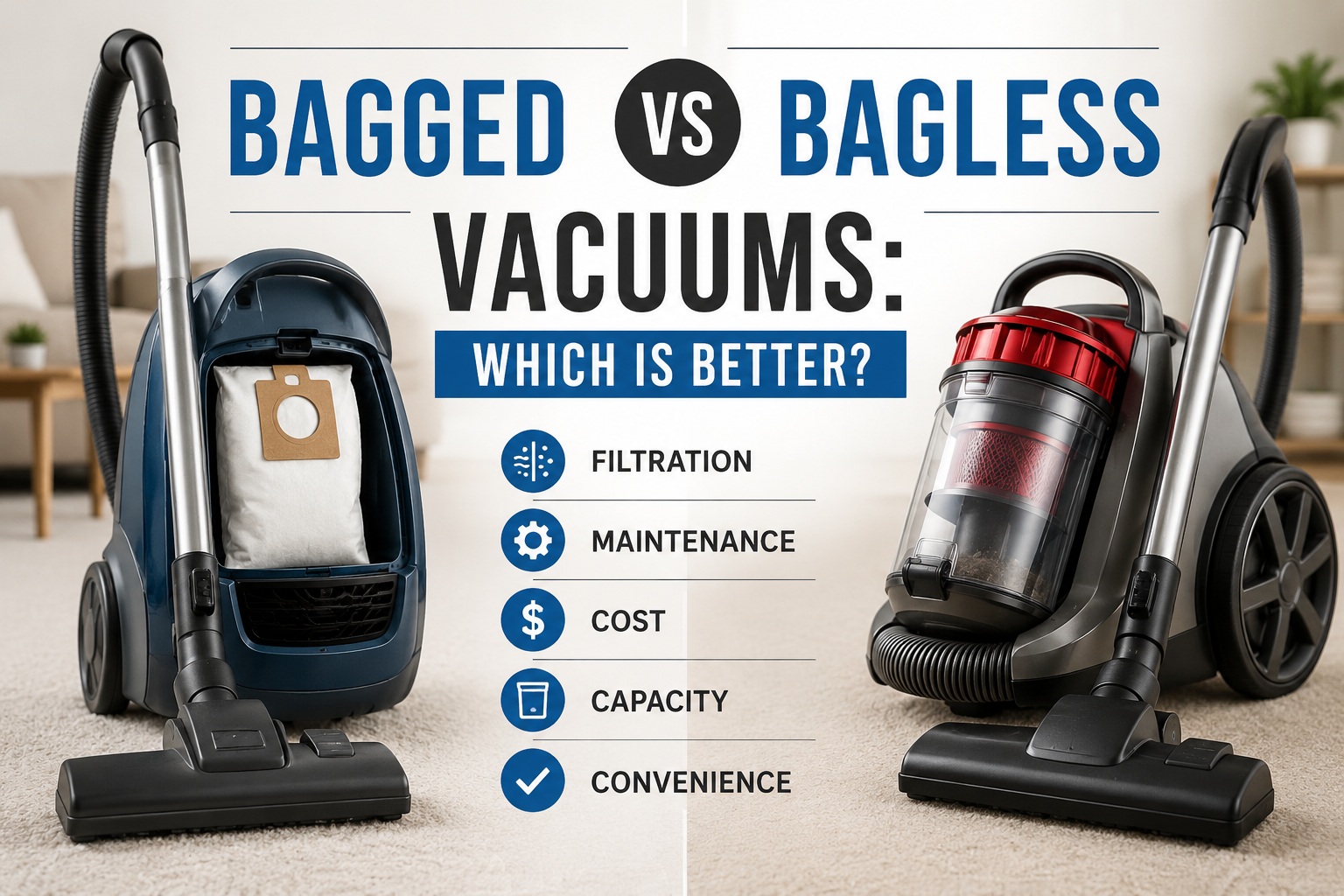
 Bagged vs Bagless Vacuums: Which Is Better?
Bagged vs bagless vacuums remain one of the most common comparisons shoppers make when choosing a new vacuum cleaner. Although both designs can clean effectively, they collect dirt differently and require different levels of maintenance. Therefore, the better choice depends on your household, flooring, allergy concerns, pets, cleaning habits, and personal preferences.
A bagged vacuum stores collected dirt inside a replaceable vacuum bag. Meanwhile, a bagless vacuum sends dirt into a reusable dust cup or collection bin. At first, this may appear to be a simple difference. However, the collection system can affect dust disposal, filtration, capacity, maintenance, operating costs, and overall convenience.
Before purchasing your next machine, compare the advantages and disadvantages of both designs. You can also explore the complete selection of residential and commercial vacuums at The Vacuum Factory.
How Does a Bagged Vacuum Work?
A bagged vacuum pulls dirt, dust, pet hair, and other debris through the cleaning nozzle and into a disposable collection bag. Depending on the machine, the bag may also serve as part of the filtration system.
As air moves through the bag material, debris remains inside while filtered air continues through the vacuum. Many modern bags use multiple layers of material to help contain fine dust. Additionally, some bags include self-sealing openings that close when the bag is removed.
Once the bag becomes full, it is removed and replaced. As a result, users generally have limited direct contact with the collected dirt.
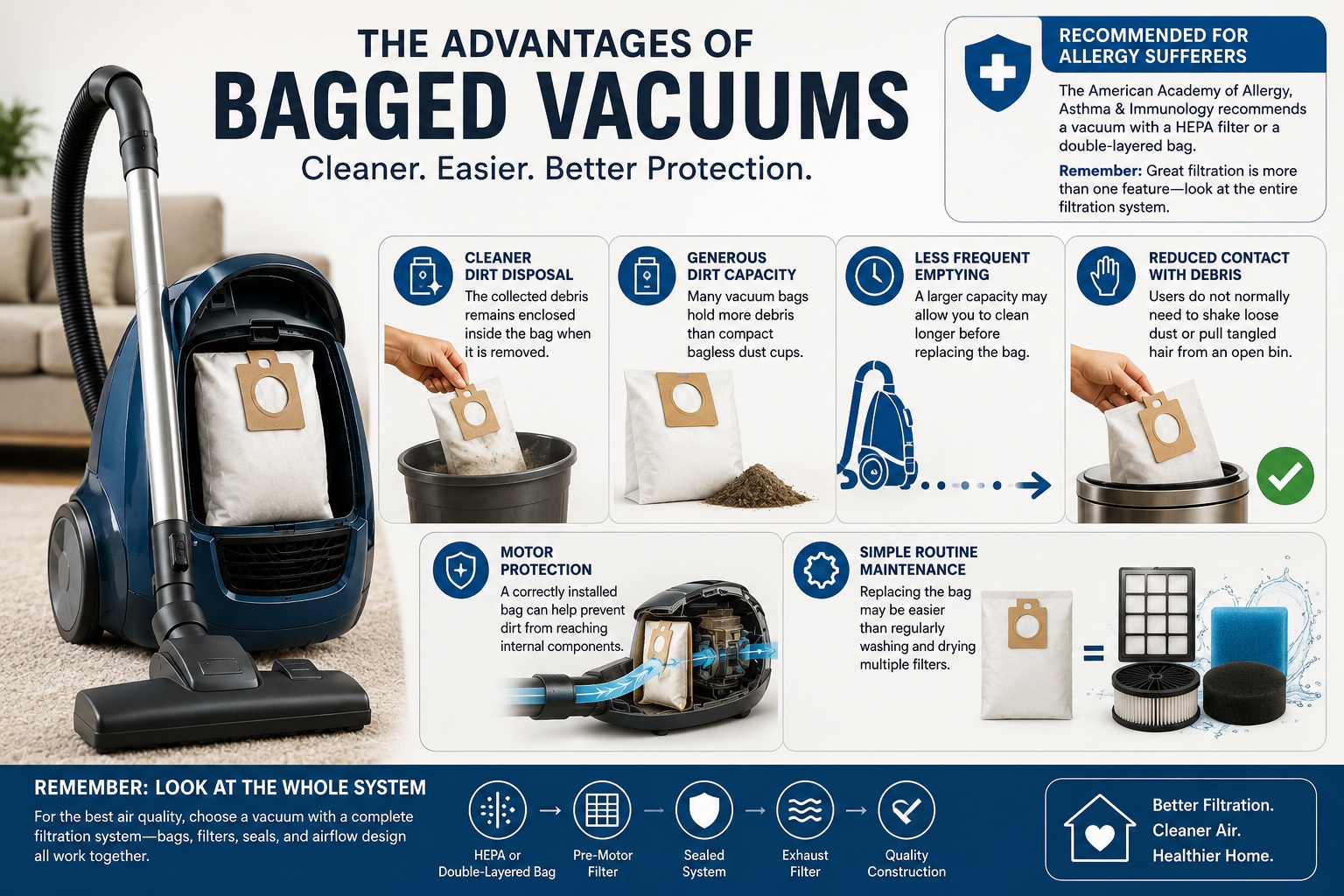 Advantages of Bagged Vacuums
Bagged vacuum cleaners offer several practical benefits, especially for households concerned about dust containment and easy disposal.
- Cleaner dirt disposal: The collected debris remains enclosed inside the bag when it is removed.
- Generous dirt capacity: Many vacuum bags hold more debris than compact bagless dust cups.
- Less frequent emptying: A larger capacity may allow users to clean longer before replacing the bag.
- Reduced contact with debris: Users do not normally need to shake loose dust or pull tangled hair from an open bin.
- Motor protection: A correctly installed bag can help prevent dirt from reaching internal components.
- Simple routine maintenance: Replacing the bag may be easier than regularly washing and drying multiple filters.
The American Academy of Allergy, Asthma & Immunology recommends that people with allergies consider a vacuum with a HEPA filter or a double-layered bag. However, shoppers should still evaluate the vacuum’s entire filtration system rather than relying on one feature alone.
Disadvantages of Bagged Models
Although bagged machines are convenient, replacement bags create an ongoing expense. Additionally, the correct bag must be available when the current one becomes full.
Some older machines do not clearly indicate when the bag should be replaced. Consequently, users may continue cleaning with an overfilled bag, which can restrict airflow and reduce performance.
Common disadvantages include:
- The recurring cost of replacement bags
- The need to keep spare bags available
- Possible performance loss when the bag becomes overfilled
- Difficulty seeing exactly how much debris has been collected
- The need to match the bag to the correct make and model
Fortunately, The Vacuum Factory carries paper, filtration, and allergen vacuum bags for a wide range of residential, commercial, and specialty machines.
How Does a Bagless Vacuum Work?
A bagless vacuum collects dirt inside a reusable container rather than a disposable bag. Many models use cyclonic airflow to separate debris from the moving air before directing that air through one or more filters.
After cleaning, the user removes or opens the dust cup and empties the debris into a trash can. The container is then returned to the machine and used again.
Because there are no disposable bags to replace, bagless vacuums can be appealing to shoppers who prefer seeing the collected dirt or avoiding recurring bag purchases.
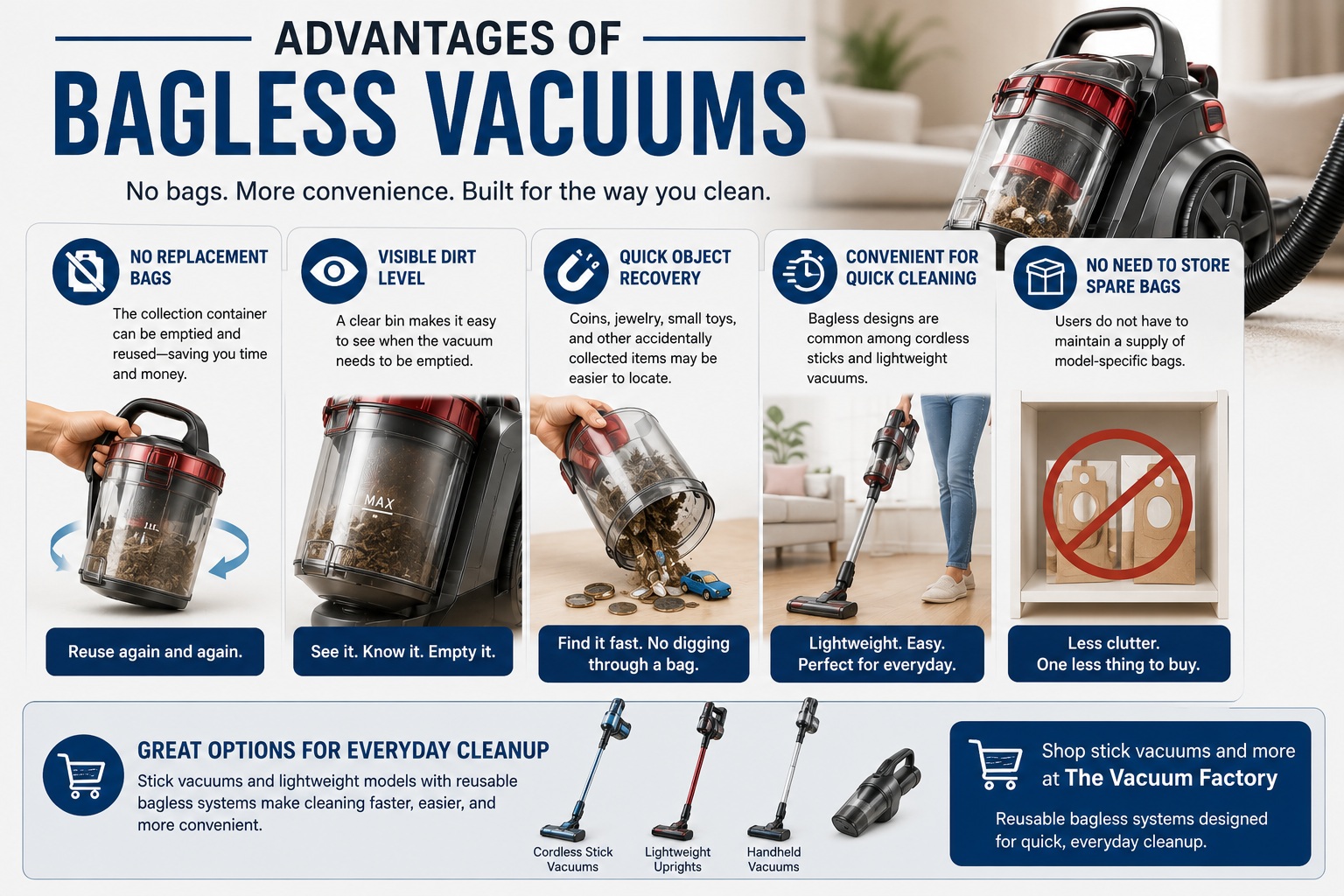 Advantages of Bagless Vacuums
The most obvious advantage is that users do not need to purchase replacement bags. However, bagless machines offer several additional conveniences.
- No replacement bags: The collection container can be emptied and reused.
- Visible dirt level: A clear bin makes it easy to see when the vacuum needs to be emptied.
- Quick object recovery: Coins, jewelry, small toys, and other accidentally collected items may be easier to locate.
- Convenient for quick cleaning: Bagless designs are common among cordless sticks and lightweight vacuums.
- No need to store spare bags: Users do not have to maintain a supply of model-specific bags.
For example, shoppers who prioritize lightweight convenience can browse stick vacuums available from The Vacuum Factory. Many of these machines use reusable bagless collection systems designed for quick everyday cleanup.
Disadvantages of Reusable Dust Bins
Although bagless vacuums eliminate the cost of bags, they do not eliminate maintenance. The dust cup must be emptied, while filters, screens, seals, and cyclonic passages may require periodic cleaning.
Emptying an open dust bin can also allow fine particles to become airborne, especially when the container is shaken or emptied into a full trash can. Therefore, individuals who are highly sensitive to dust may prefer a sealed bagged system.
Common disadvantages include:
- More direct contact with collected dirt
- Dust clouds during careless disposal
- Frequent emptying on models with smaller bins
- Hair and debris becoming trapped around internal components
- Filters that require regular cleaning or replacement
- Performance loss when filters or cyclonic passages become clogged
Washable filters must also be allowed to dry completely before being reinstalled. Otherwise, moisture can contribute to unpleasant odors, restricted airflow, or damage. Always follow the manufacturer’s instructions because not every vacuum filter is washable.
Which Type Offers Better Filtration?
Neither collection style automatically guarantees better filtration. A high-quality bagged vacuum may provide excellent dust containment. Likewise, a properly designed bagless vacuum may perform well when equipped with effective filters and tight seals.
Instead of looking only at whether a vacuum has a bag, consider the complete filtration path. Important features may include:
- A multi-layer filtration bag
- A pre-motor filter
- A high-efficiency exhaust filter
- Sealed connections around the bin or bag compartment
- Quality gaskets and housing seals
- A design that directs all exhaust air through the final filter
According to the U.S. Environmental Protection Agency, a HEPA filter can theoretically capture at least 99.97% of airborne particles measuring 0.3 microns. Nevertheless, installing a HEPA filter does not automatically make the entire vacuum a sealed HEPA system. Air that escapes around the filter, dust cup, bag chamber, or housing can bypass the filtration material.
Therefore, customers with allergies should evaluate both the filter and the vacuum’s overall construction. They should also replace bags and filters according to the manufacturer’s instructions.
Visit The Vacuum Factory’s vacuum bags and filters department to find HEPA filters, cartridge filters, foam filters, mesh filters, exhaust filters, allergen bags, and other replacements.
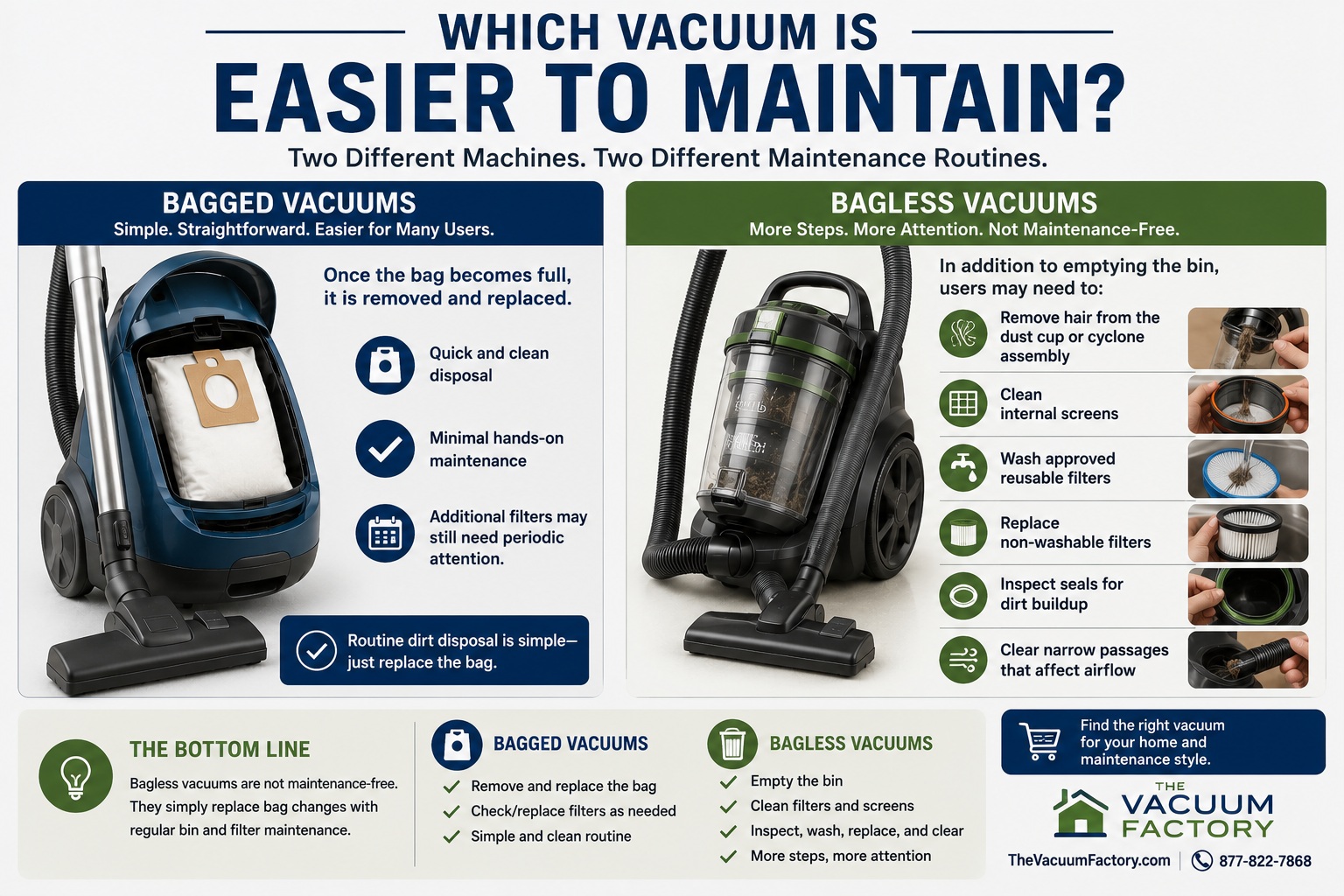 Which Vacuum Is Easier to Maintain?
Bagged vacuums are often easier for users who want straightforward maintenance. Once the bag becomes full, it is removed and replaced. Depending on the machine, additional filters may still need periodic attention, but routine dirt disposal remains relatively simple.
Bagless vacuums require a different maintenance routine. In addition to emptying the bin, users may need to:
- Remove hair from the dust cup or cyclone assembly
- Clean internal screens
- Wash approved reusable filters
- Replace non-washable filters
- Inspect seals for dirt buildup
- Clear narrow passages that affect airflow
Consequently, a bagless vacuum is not necessarily maintenance-free. It simply replaces bag changes with bin and filter maintenance.
Bag Cost vs Filter Cost
Bagless vacuums are often promoted as less expensive to operate because they do not require disposable bags. While that can be true, buyers should also consider the cost of replacement filters.
Depending on the model, a bagless machine may use a combination of foam, felt, cartridge, pre-motor, and exhaust filters. Some filters are washable, while others must be replaced. Furthermore, damaged or heavily contaminated filters may need replacement sooner than expected.
Bagged vacuums require a continuing supply of bags. However, the bag may also capture much of the fine debris before it reaches the remaining filters. Therefore, downstream filters may stay cleaner when the correct bag is installed and replaced on schedule.
The true operating cost depends on:
- How frequently the vacuum is used
- The amount of debris collected
- The price and capacity of each bag
- The number and type of filters used
- Whether filters are washable or disposable
- The manufacturer’s recommended replacement schedule
Rather than assuming one system will always cost less, compare the price and availability of both bags and filters before purchasing the vacuum.
Which Design Has More Dirt Capacity?
Full-size bagged uprights and canisters commonly offer more usable dirt capacity than compact bagless stick vacuums. Consequently, they can be practical for large homes, pet owners, commercial cleaners, and anyone collecting substantial amounts of carpet debris.
Many bagless bins are smaller and may need to be emptied after every cleaning session. Some compact models may require emptying more than once while cleaning a large home.
However, capacity varies considerably. A full-size bagless upright may hold more dirt than a compact bagged vacuum. Therefore, always compare the stated capacity of the specific models rather than judging by collection style alone.
What Is Better for Homes with Pets?
Both types can work well in homes with dogs and cats. Pet owners should focus on the complete cleaning system, including:
- Brush-roll performance on carpet
- Hair-removal tools for furniture and stairs
- Dirt capacity
- Odor control
- Filtration
- Ease of removing tangled hair
- Availability of replacement bags, filters, and belts
A bagged vacuum can make disposing of pet hair and dander cleaner. Meanwhile, a bagless vacuum allows users to see when the bin is filling with hair. Nevertheless, pet hair can become packed around cyclones, screens, and internal shrouds, so the bin may occasionally require hands-on cleaning.
For homes with several pets, a larger-capacity bagged upright or canister may require less frequent emptying. On the other hand, a lightweight bagless stick can be convenient for quickly collecting hair between deeper cleaning sessions.
Which One Is Better for Commercial Cleaning?
Many schools, offices, churches, hotels, restaurants, and professional cleaning companies rely on bagged commercial vacuums. Disposable bags can simplify dirt disposal, reduce cleanup around the machine, and allow staff members to install a fresh collection container quickly.
Additionally, high-capacity bags can support longer cleaning sessions. For example, a cleaning crew may prefer changing a sealed bag instead of washing bins and filters between jobs.
However, bagless commercial models may be useful when crews collect bulky debris, need to monitor the container frequently, or want to avoid managing a supply of bags.
The best commercial choice depends on the facility, debris type, cleaning schedule, employee training, and maintenance procedures.
Choose a Bagged Vacuum When…
A bagged model may be the better choice when you:
- Prefer cleaner and more contained dirt disposal
- Are sensitive to dust during vacuum maintenance
- Want a larger collection capacity
- Do not want to wash a dusty collection bin regularly
- Clean a large home or commercial facility
- Are comfortable purchasing replacement bags
- Want a simple remove-and-replace maintenance routine
Choose a Bagless Vacuum When…
A bagless model may be the better choice when you:
- Do not want to purchase replacement bags
- Prefer seeing the collected dirt
- Use the vacuum mainly for quick daily cleanup
- Do not mind emptying and cleaning the dust bin
- Want a cordless stick or other lightweight design
- Frequently pick up small objects that may need to be recovered
- Are willing to maintain the vacuum’s filters carefully
Bagged vs Bagless Vacuums: The Final Decision
So, which vacuum is better? In reality, there is no universal winner in the bagged vs bagless vacuums comparison.
Bagged machines generally provide more contained disposal, generous capacity, and straightforward maintenance. Therefore, they can be an excellent choice for allergy-conscious households, pet owners, large homes, and commercial facilities.
Bagless machines eliminate replacement-bag purchases and make it easy to monitor collected debris. As a result, they may appeal to shoppers seeking lightweight convenience, quick cleanup, or a reusable collection system.
Most importantly, do not choose a vacuum based solely on whether it uses a bag or a bin. Consider your flooring, square footage, pets, filtration needs, preferred attachments, maintenance habits, and access to replacement parts.
Whether you choose a bagged upright, bagless stick, high-filtration canister, backpack vacuum, wet/dry vacuum, or central vacuum system, The Vacuum Factory can help you find the machine and replacement components needed to keep it working properly.
Shop vacuums at The Vacuum Factory, or browse our complete selection of vacuum bags, filters, and filtration products. For assistance finding the correct product for your make and model, call 877-822-7868.